
Back
SkinSeoul • 2025
Transforming a static product page (PDP) into a context-aware decision support system

Role:
Product Designer
Timeline:
June - October, 2025
Constraints:
Front-end design changes only
No backend restructuring
Personalization logic limited to existing survey feature
Scope:
UX audit → Redesign →
Usability testing → Iteration
Team:
1 Product Designer, 2 Developers
Context & Ownership
The Real Problem
Strategic Reframe
Instead of asking
I reframed the challenge as
This shifted the redesign from content hierarchy → cognitive support. That reframing defined the rest of the work
Iteration Approach
Rather than executing a full redesign, I chose staged iteration to reduce risk:
→
→
Each version tested a deeper hypothesis
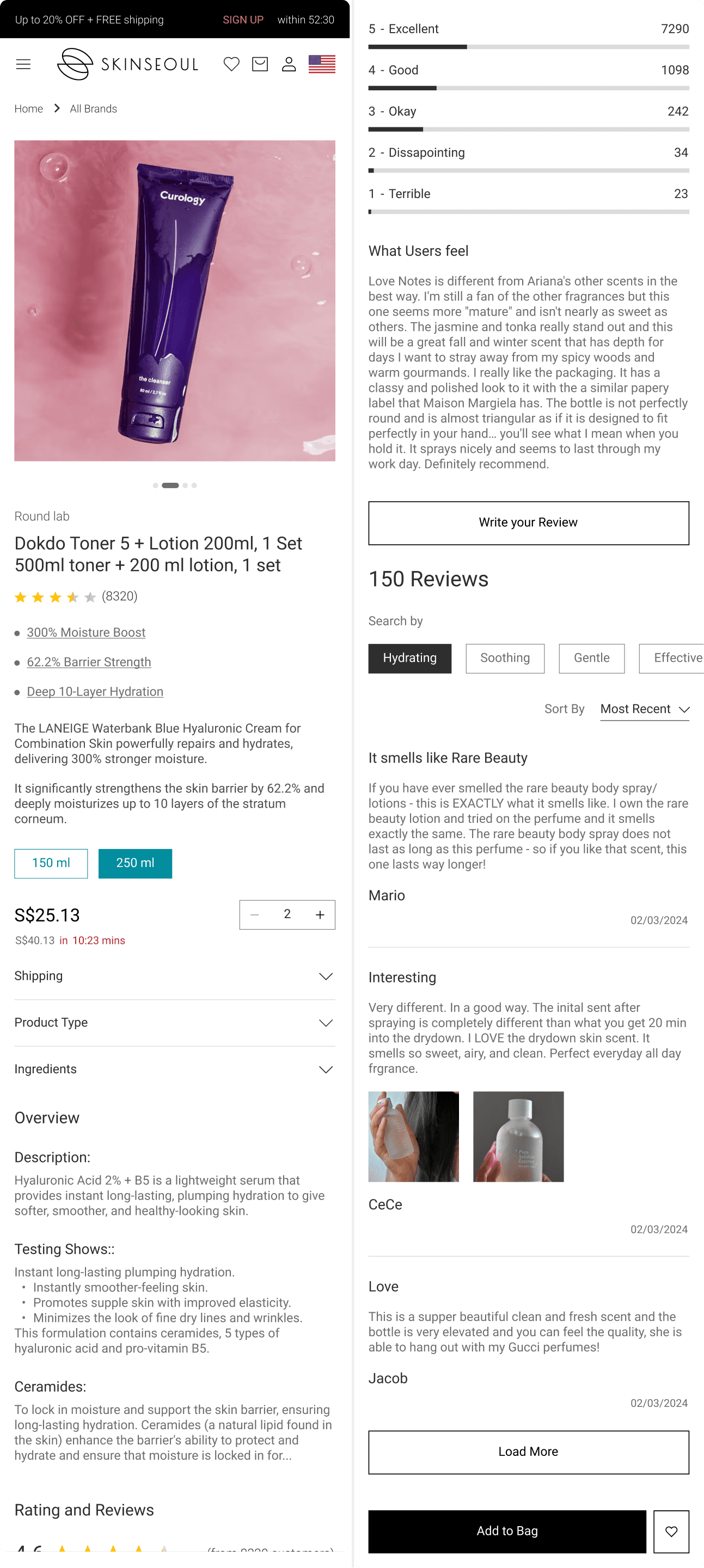
Version 1 design
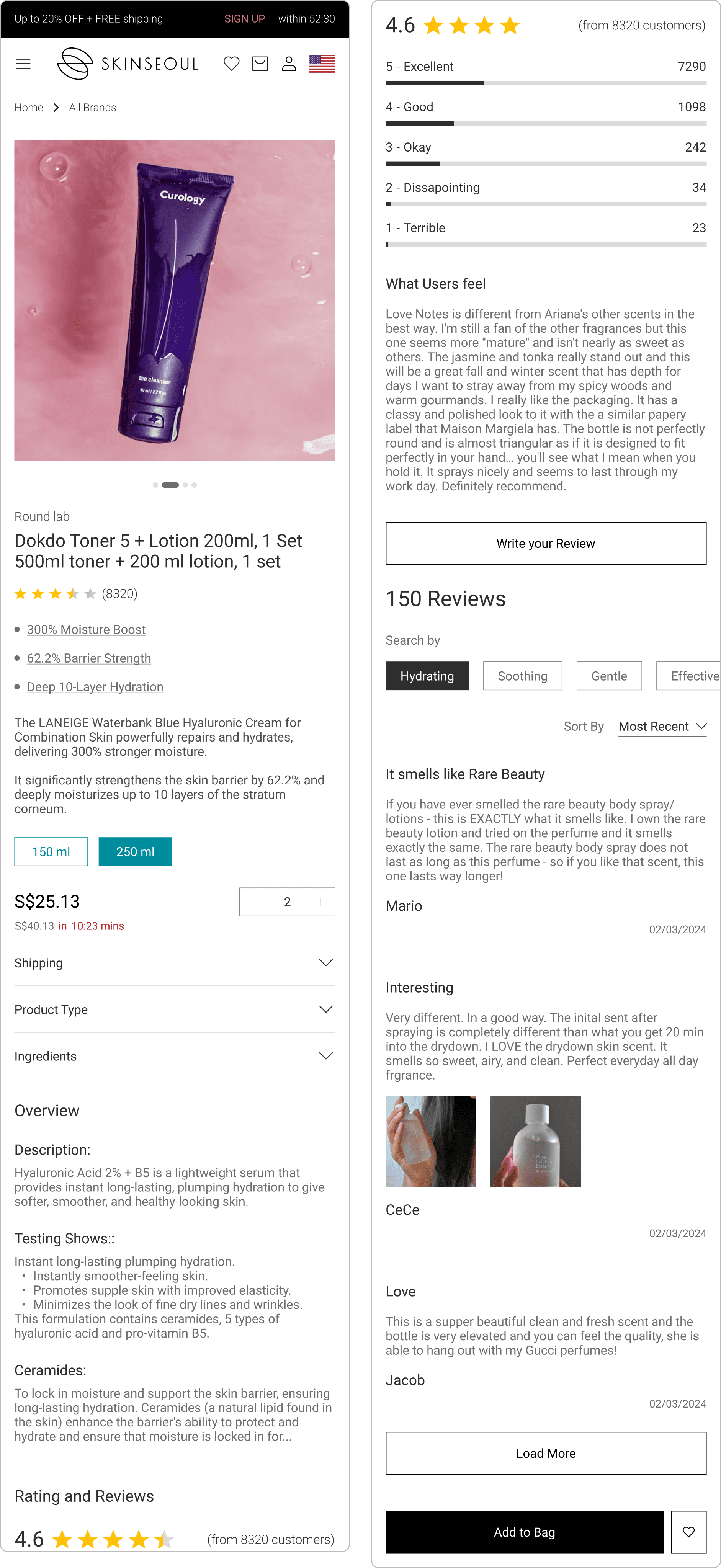
Version 2: Structural Clarity
Our goal was to
Improvements:
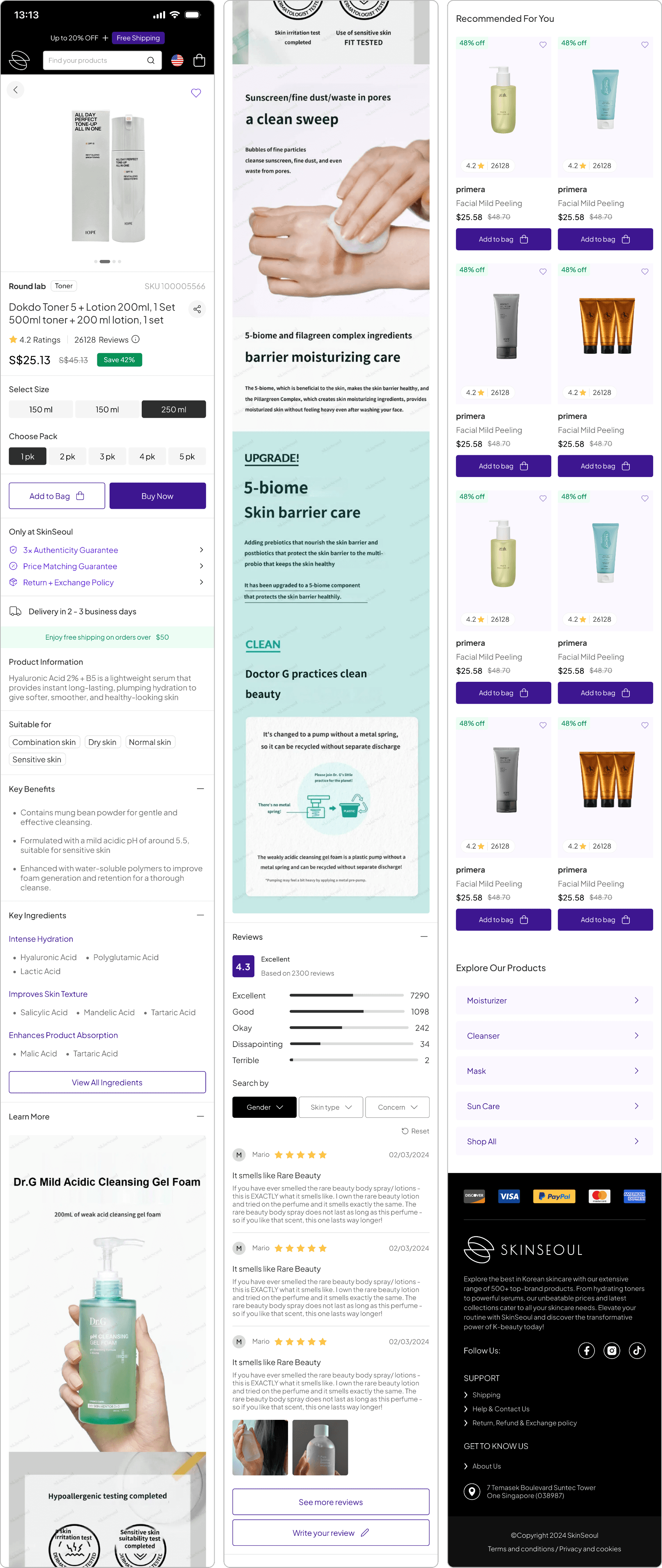
But during user conversations and observation sessions, a pattern emerged
Users still asked
The layout improved. Decision confidence did not
Structural clarity solved scanning. It did not solve interpretation.
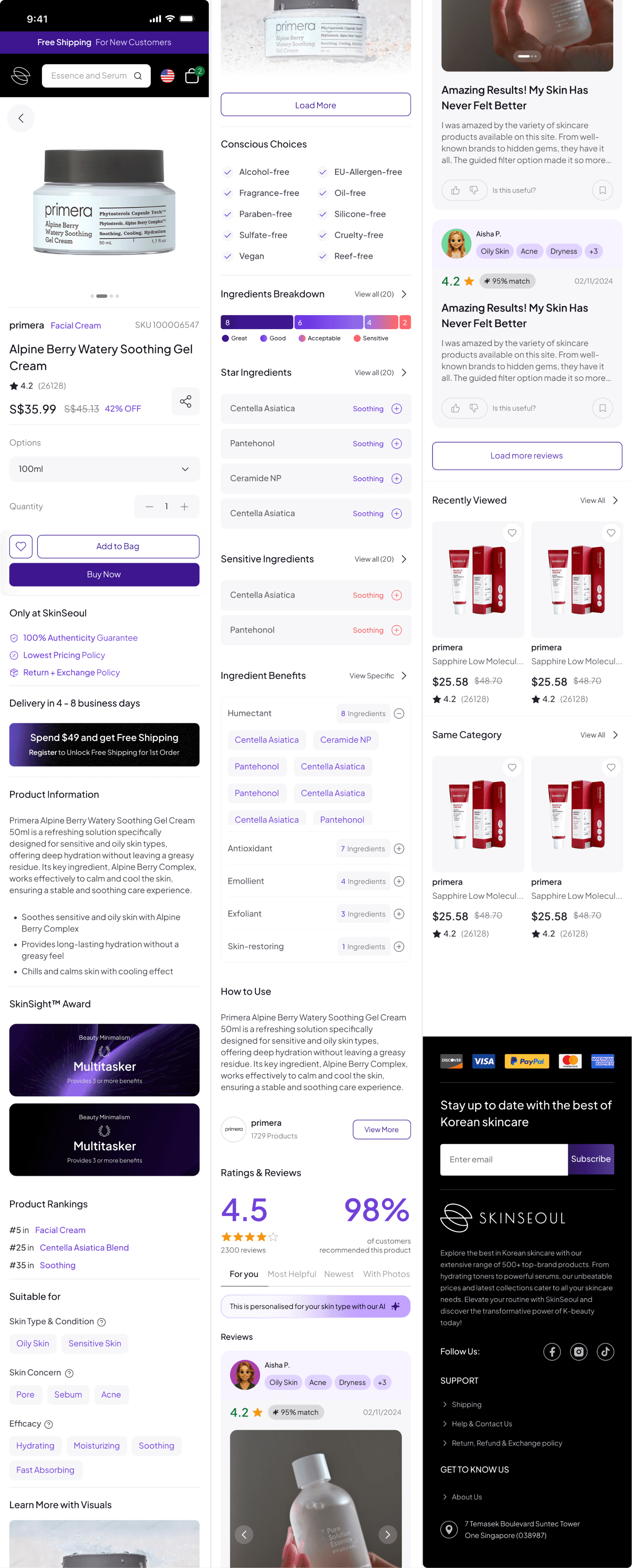
Version 3 (Final): Decision Support System
Instead of adding more information, I focused on:
Competitor Analysis:
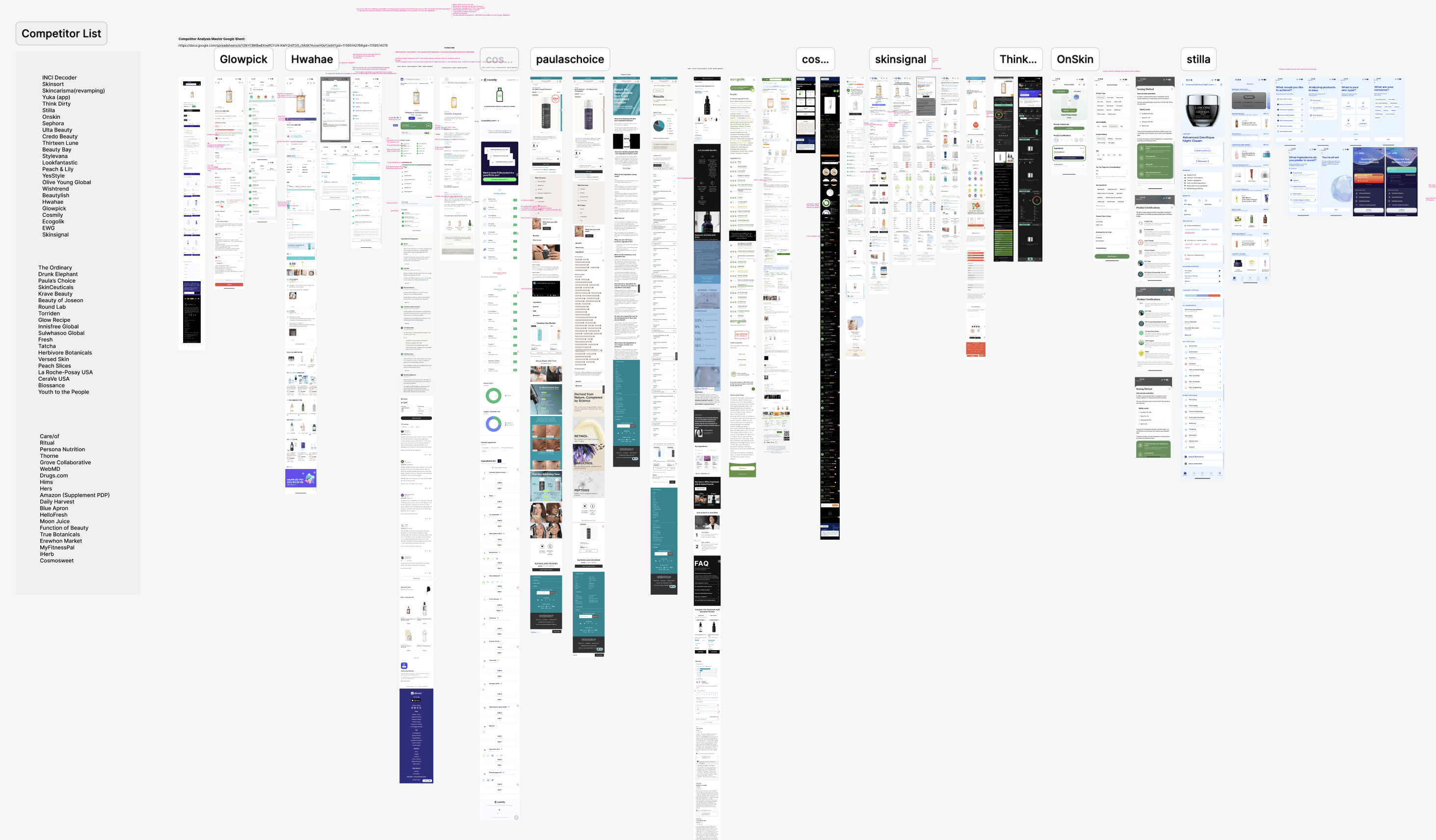
Design Decisions Made Based on Competitor Analysis
Competitor Insight
Our Strategic Decision
Business Rationale
Reviews drive purchase decisions, but lack personalization
Added skin-type tagged reviews + match percentage
Reduced confusion. Users knew the next step without thinking. Lower cognitive load.
Ingredient percentages confuse most users
Replaced ratio-based display with 3 hero ingredients + plain-language benefits
Clear decision hierarchy. Faster task completion. Less distraction.
Products lack clear differentiation
Cleaner spacing. Clear separation between problem and editor. Simplified footer actions.
Easier scanning. Better focus on solving problems. Reduced mental effort.
Too much information shown at once
Unified icon system aligned with design system. Clear labeling.
Faster recognition. Reduced learning curve for new users.
Low-fi with more ideations

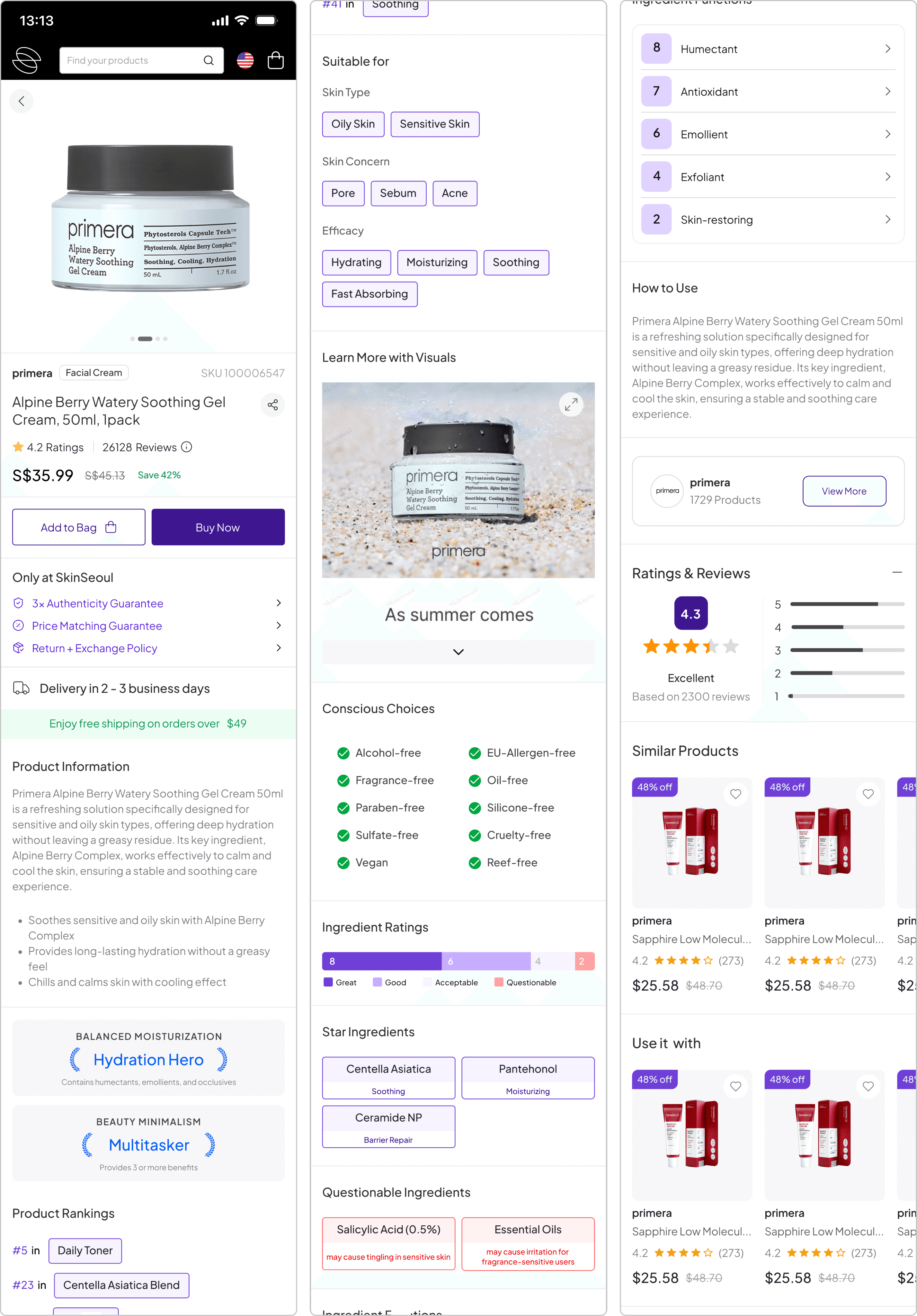
After discussing with the business teams and developers, I have prioritised features based on development constraints and business outcomes
Nope, I DIDN’T STOP THERE. I made some internal survey and user testing with the users and ended up with this design

Improvements:
Outcome
Instead of listing ingredients, I:
Grouped them by function (hydrating, soothing, etc.)
Marked sensitive ingredients
Highlighted star ingredients
Showed ingredient benefits clearly
Now users did not have to research outside the page.
I added review filtering based on skin type
This helped users see reviews from people similar to them.
It made the reviews more relatable and trustworthy
I added:
Suitable skin types
Skin concerns
Product effectiveness
This reduced confusion.
The page now clearly shows:
Recommendation percentage
Product ranking in category
This increased trust and authority.
I used expandable sections so:
Simple users can scan quickly
Detailed users can explore more
This balanced clarity and depth.
The layout improved. Decision confidence did not
Structural clarity solved scanning. It did not solve interpretation.
Trade-Offs & Decisions
It would increase personalization but also increase friction before Add-to-Bag.
Advanced users value transparency. Removing detail would reduce trust.
Authority can increase trust, but over medicalizing could intimidate users.
Finally
A product page that presented information, but left users to connect the dots on their own.
After:
A structured decision-support system that:
Reduces uncertainty, Supports comparison, Lowers research burden, Signals trust and authority, Balances depth with clarity
Gains